
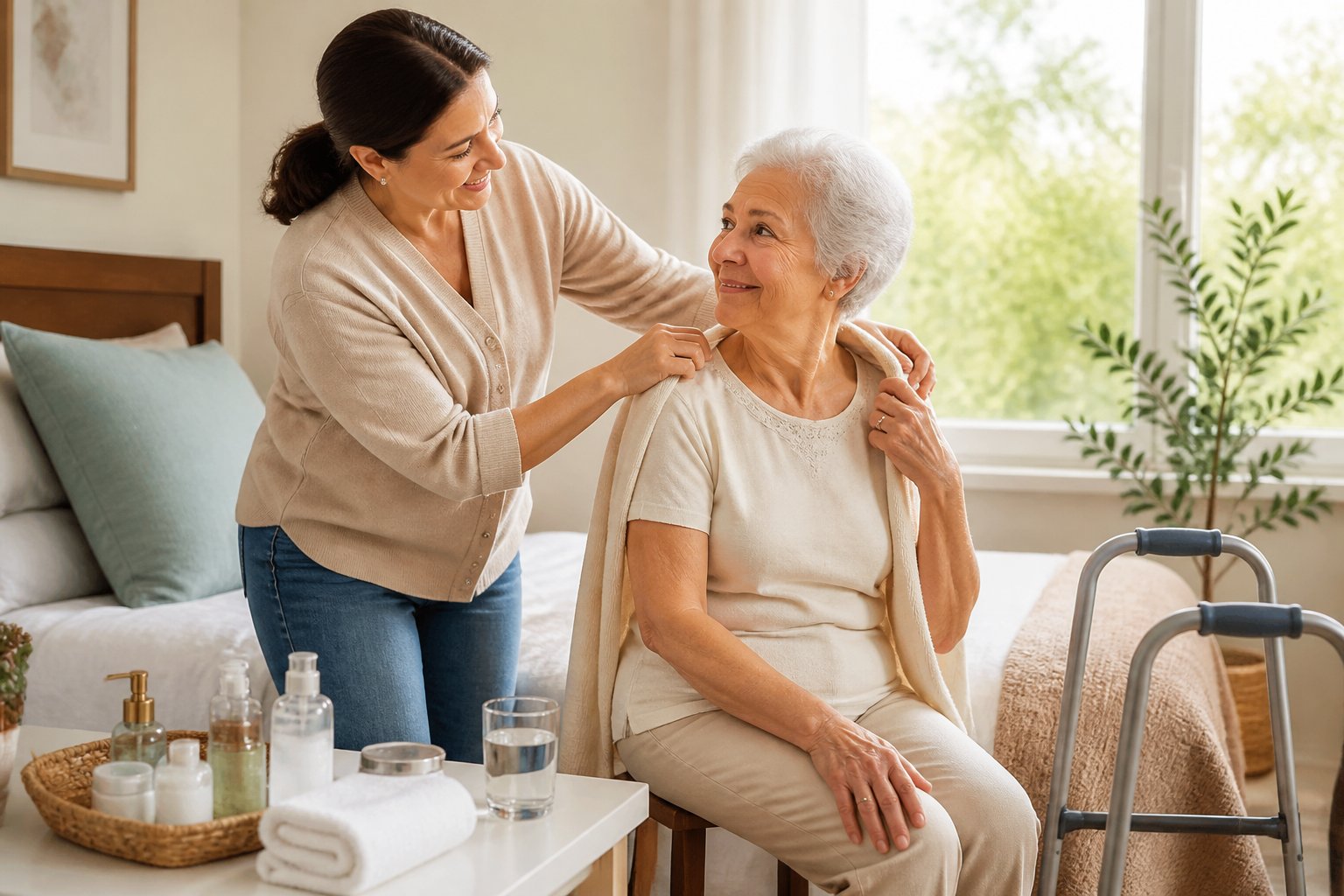
It usually starts with something small. Maybe your mother stopped taking showers as often, or your husband started skipping meals. Maybe you found yourself buttoning a shirt for someone who used to do it without a thought. If you feel a knot of guilt about even thinking the words “she needs help,” you are not failing anyone. You are paying attention, which is exactly what love looks like at this stage.
Families across Greater Boston sit with this same discomfort every day. Needing help with bathing or dressing does not mean your loved one has lost their independence. It often means the right support can protect it.
Personal care for seniors at home exists for exactly this moment, when daily tasks get harder but home is still where your loved one wants to be.
Keep reading, and you will find a plain-English look at what this care actually involves day to day, who provides it, how care plans get built, and how to decide how much help is enough. You are not just gathering information. You are trying to make a decision you can live with, and that deserves clear answers.
Understanding Day-To-Day Support at Home
Personal care is hands-on help with the private, physical parts of daily life: bathing, dressing, grooming, using the bathroom, and moving safely around the house. It is not medical treatment. It is the kind of steady, respectful assistance that lets someone stay in their own bedroom instead of a facility room.
What Personal Care for Seniors at Home Means
Think of it as help with the things your loved one used to handle alone, delivered by a trained caregiver in their own home. A caregiver comes to the house on a set schedule, learns the routines that matter, and supports them without taking over.
Good in-home care follows the person, not a template. One client may need two hours of morning help getting washed and dressed. Another may need someone present most of the day. The service adjusts, which is why in-home care services usually begin with a conversation instead of a price sheet.
What makes this work is the caregiver as a person. Screening, background checks, and training happen before anyone steps into a home. Compassion is not a bonus feature here. It is the job.
Help With Activities of Daily Living
Care professionals use the phrase activities of daily living (ADLs) to describe the basic self-care tasks everyone handles. When one or two become unsafe or exhausting, that is usually the signal families notice first.
ADLs commonly include:
- Bathing and showering
- Dressing and undressing
- Grooming, shaving, and oral care
- Toileting and continence care
- Transferring, such as getting out of bed or a chair
- Eating and drinking
Related tasks, sometimes called instrumental activities, include meal preparation, light housekeeping, laundry, and getting to appointments. A senior personal care assistant can support both sets, which is why personal care services often cover more ground than families expect.
The Difference Between Personal Care and Medical Care
Personal care is non-medical. It does not include wound care, injections, or skilled nursing tasks. Those belong to home health services ordered by a physician, often provided by a nurse or therapist for a limited recovery period.
The distinction matters for coverage, too. Medicare notes that it does not pay for custodial or personal care when help with bathing or dressing is the only care someone needs.
Once the line between the two is clear, the next question most families ask is simple: what does a caregiver actually do during a shift?
Practical Help That Makes Daily Routines Safer
A caregiver’s shift is built around the moments when something could go wrong. Stepping into the tub, standing up from a chair, remembering the afternoon pill. Safety happens inside ordinary routines, not separate from them.
Bathing, Grooming, Dressing, and Toileting
Bathing assistance is often the hardest place to start for everyone. A wet floor and a slick tub make the bathroom the riskiest room in the house. Most people would rather not be helped there by their own child.
That is exactly why a trained caregiver helps. Bathing, incontinence care, and dressing are handled with privacy, patience, and no rushing. Skilled caregivers protect modesty by keeping towels within reach, talking through each step, and letting your loved one do what they still can. If you have been struggling with these conversations, guidance on helping parents with personal care may take some pressure off.
Mobility, Transfers, and Fall Prevention
Falls are the single biggest threat to aging in place. A caregiver who is present during transfers, bathroom trips, and nighttime movement removes most of the risk before it happens.
Practical support includes:
- Steadying a walker or cane on turns and thresholds
- Assisting safe transfers from bed, chair, or wheelchair
- Clearing cords, rugs, and clutter from walking paths
- Improving lighting in hallways and bathrooms
- Watching for weakness, dizziness, or changes in gait
Caregivers trained in fall prevention support also learn to work around medical equipment such as wheelchairs, transfer belts, and shower chairs.
Meals, Light Housekeeping, and Everyday Errands
Meal preparation does more than fill the fridge. It restores appetite, routine, and a little pleasure. Caregivers cook what your loved one actually likes, watch food intake, and keep the kitchen clean and safe.
Light housekeeping keeps the home livable: laundry, dishes, bed linens, tidying walkways. Errands and transportation services cover groceries, the pharmacy, and visits that keep life feeling normal.
Medication Reminders and Appointment Support
Caregivers provide reminders, not prescriptions. They can prompt your loved one at the right time, note whether the dose was taken, and flag concerns to the family right away.
For doctor’s appointments, a caregiver can drive, walk your loved one in, and report back what was said. That single detail eases the load on adult children juggling work and distance.
Practical help keeps the body safe. The next question is what keeps the spirit steady.
Companionship and Personalized Support for the Person You Know
Loneliness wears on older adults as much as any physical problem. Companionship is not filler time on a schedule. It is the part of care that protects mood, memory, and the will to stay engaged.
How Companion Care Supports Emotional Well-Being
One-on-one support means someone notices things. A caregiver who visits regularly sees when your mother stops reading, sleeps more, or grows quiet at the table. Those small shifts are early signals.
Conversation, card games, a walk to the mailbox, a phone call with grandkids: this is what companionship support looks like in practice. The National Institute on Aging emphasizes that preventing social isolation in older adults supports healthier aging.
Keeping Familiar Routines, Interests, and Connections
Personalized senior care starts with knowing the person, not the diagnosis. What time does he like his coffee? Which hymns does she still sing? Who does he want called first?
Care plans capture details like these:
- Preferred wake time, meals, and bedtime rhythm
- Hobbies, music, faith practices, and favorite shows
- Topics or situations that cause distress
- Names and photos of family members and old friends
Consistent caregiver matching matters here. A familiar face builds trust faster and catches subtle changes a rotating stranger would miss.
Care Options for Changing Needs and Memory Loss
Needs rarely stay still. Short-term care may cover a few weeks after a hospital stay. Long-term care builds slowly over years. Both are normal paths.
For memory loss, caregivers receive specialized training in redirection, wandering risk, and calm routines. Families managing Alzheimer’s or dementia often combine in-home dementia care with family respite breaks so the primary family caregiver can rest without guilt.
All of this depends on one thing: a care plan built around your family, not a generic checklist.
Building a Care Plan You Can Trust
A good care plan is written after someone sits in your loved one’s living room, not over the phone. That in-home assessment is where guesswork ends, and specifics begin.
What Happens During an In-Home Assessment
The visit is a conversation, free and with no obligation. A care coordinator asks about daily routines, safety concerns, medical history, and what your loved one wants for themselves.
They also look at the house: stairs, bathroom layout, lighting, tripping hazards, where the phone sits. Family members are welcome and encouraged to ask questions, especially about schedules, caregiver matching, and cost.
By the end, you should have a clear picture of how many hours of at-home personal care make sense and what those hours would cover.
How a Personalized Care Plan Adapts Over Time
The plan is a living document. After a fall, a hospital stay, or a new diagnosis, it gets revisited and revised. Ongoing care evaluation exists for that reason.
Common triggers for updating a care plan include:
- A hospitalization or new medication regimen
- Increased confusion, wandering, or nighttime restlessness
- Reduced appetite or unexplained weight loss
- A family caregiver’s own health or work change
- New mobility limits or use of a wheelchair
Families who understand the value of a written care plan tend to face fewer emergencies because problems get named early.
Why Screened, Trained Caregivers Matter
The person who walks through your parent’s door matters more than any brochure. The strongest agencies employ their caregivers as staff rather than using independent contractors. That means screening, training, supervision, and accountability run through one organization.
A thorough onboarding process covers background screening, advanced training, and careful evaluation before placement. When an agency really works this way, that structure is not a promise. It is a process.
How Family Members Can Stay Informed and Involved
Shift documentation keeps everyone current. Caregivers note what happened during the visit, what changed, and what needs attention.
Designated family contacts receive updates, which helps siblings who live out of state stay part of the decisions. On-call support means someone answers when the unexpected happens at 2 a.m.
With the plan in place, the practical question becomes how much help your loved one actually needs.
Choosing the Right Level of Help and Planning Ahead
Most families start with fewer hours than they end up needing. That is a reasonable way to begin. The right level of care is the smallest amount that keeps your loved one safe and steady.
When a Few Hours of Help May Be Enough
If your loved one manages most of the day but struggles with mornings, bathing, or meals, a few scheduled visits per week may be plenty. This is often enough to stop small problems from turning into a crisis.
A few hours also protect family caregivers. A spouse who gets three afternoons free is a spouse who can keep going.
When Live-In or Around-The-Clock Support May Be Needed
Around-the-clock care makes sense when nights become unsafe. Wandering, falls after dark, frequent bathroom needs, or advanced memory loss usually point in this direction.
Signs to watch for:
- Getting up and moving around unsupervised at night
- More than one fall in a short period
- Leaving the stove on or the door unlocked
- Confusion about time, place, or people
- A family caregiver who cannot sleep
If you are weighing this, resources on full-time live-in care and signs that your loved one may need 24-hour care can help you gauge where things stand.
Comparing Aging in Place With Senior Housing Options
Neither path is wrong. A residential care home or senior housing community offers built-in staffing, meals, and social programming. Some families genuinely prefer that structure.
Home care offers one-on-one attention, familiar surroundings, and flexible hours. Care shifts up or down without a move. Families comparing live-in care and assisted living often weigh cost against the emotional toll of relocation.
Questions To Ask About Cost, Coverage, and Care Needs
Personal care is usually paid privately, through long-term care insurance, or in some cases through Medicaid or veteran care benefits. Medicare generally covers short-term home health services such as physical therapy or skilled nursing. It does not cover ongoing personal care.
Ask about hourly minimums, live-in rates, holiday pricing, caregiver consistency, and how quickly a plan can change. Then ask what you would do if your loved one had a fall next week.
That last question is usually the one that moves a family from researching to calling.
Choosing Daily Support You Can Feel Good About
The practical takeaway is this: help with bathing, dressing, meals, and mobility is not the end of independence. Handled well by trained and compassionate caregivers, it is what makes aging in place possible for years longer than families expect.
Start With a Free In-Home Assessment
You do not have to know what you need before you call. That is the point of the assessment: someone comes to the house, listens, looks at the daily reality, and helps you sort out what would actually help.
Executive Home Care Northeast Greater Boston offers a free, no-obligation in-home assessment where you and your loved one can ask every question on your list. You can schedule an in-home assessment or call 1-855-350-2273, available 24 hours a day.
Find Support That Protects Comfort, Safety, and Dignity
Whatever you decide, your loved one deserves care that treats them like family, and you deserve to stop carrying all of this alone. A personalized care plan, built with you and adjusted as needs change, is a good place to start.
If you are ready to talk it through with someone who understands what your family is going through, reach out. No pressure, no commitment, just a conversation about what comes next.
Frequently Asked Questions
How Can You Tell When Your Loved One Needs Personal Care Support at Home?
Watch for skipped showers, worn or stained clothing, weight loss, unopened mail, or new bruises. Those are the everyday signs that daily tasks have become too hard to manage alone. One or two of these are usually enough reasons to schedule an assessment.
What Personal Care Services Can Help Your Loved One Stay Safe, Comfortable, and Independent?
Personal care typically covers bathing, grooming, dressing, toileting, incontinence care, mobility and transfer help, meal preparation, light housekeeping, and companionship. Caregivers can also provide medication reminders and transportation to appointments. These are non-medical services. Nursing tasks are handled separately by a medical provider.
Does Medicare or Medicaid Cover In-Home Personal Care for Seniors?
Medicare generally does not pay for personal care when help with bathing or dressing is the only care needed. Medicaid and some veteran benefit programs may cover it for those who qualify. Long-term care insurance and private pay are the most common ways families fund ongoing care.
How Much Does It Cost To Hire a Compassionate Private Caregiver at Home?
Cost depends on where your loved one lives, how many hours are scheduled, and whether care is hourly or live-in. Rates vary by area. The local office is the fastest way to get accurate numbers for your situation. Ask about hourly minimums and how pricing changes if hours increase later.
Can Your Loved One Receive 24/7 Live-In Care Instead of Moving to a Facility?
Yes. Live-in and around-the-clock care allow someone to stay home even with advanced needs, including late-stage memory loss. Trained caregivers cover nights, transfers, bathing, meals, and supervision so the family can rest.
How Do You Choose a Trusted, Thoroughly Screened Caregiver for Your Aging Parent?
Ask whether caregivers are employees rather than independent contractors, and what the screening and training process includes before placement. Ask how caregivers are matched to clients and what happens if the match is not right. Then ask how the agency communicates changes back to the family.