
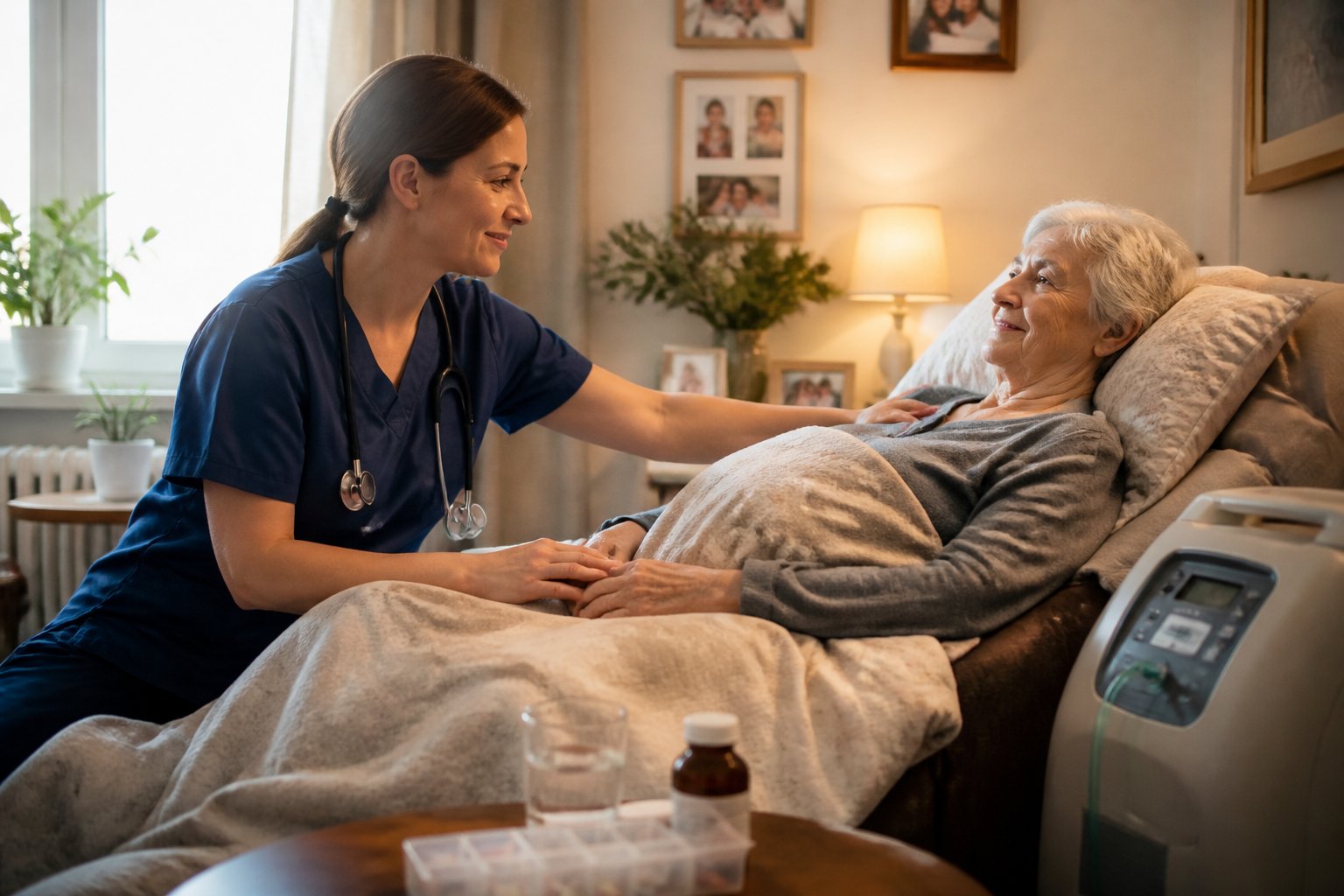
When someone you love receives a serious diagnosis, the world narrows to a single question: how do I keep them comfortable and close? You may picture hospital corridors, unfamiliar beds, and fluorescent lighting.
But for many families, the most meaningful care happens exactly where your loved one already feels safe, in the home they know, surrounded by the people they trust. Choosing palliative care at home is not giving up. It is choosing comfort, dignity, and quality of life on your loved one’s own terms.
There is no perfect way to face this, and you do not have to face it with all the answers. What follows is meant to give you a clear, honest picture so the next decision feels a little less heavy.
In this guide, you will learn how palliative support differs from hospice, what daily care actually looks like when a loved one stays home, and how non-medical in-home caregivers work alongside a medical team to fill the gaps families cannot fill alone.
Keep reading to find practical steps, honest answers, and a clear picture of what this path looks like. Your family deserves clarity, not confusion, during one of the hardest chapters you will face.
What Families Mean When They Ask About Care at Home
Most families searching for palliative care at home are not looking for a textbook definition. They are looking for a way to keep someone they love comfortable, safe, and close while managing a serious illness.
What Is Palliative Care
Palliative care is specialized medical care focused on relieving suffering and controlling symptoms so your loved one can carry out the activities that matter most. It is not limited to end-of-life situations.
Your loved one can receive palliative services alongside treatments meant to manage or even improve their condition, including chemotherapy, physical therapy, or cardiac rehabilitation.
A palliative care team typically includes physicians, nurses, social workers, and chaplains. Their goal is to address pain, shortness of breath, nausea, fatigue, anxiety, and other burdens that come with serious illness. This care centers on your loved one’s quality of life, not just their diagnosis.
Who Palliative Support Is for
Palliative support is for anyone living with a serious or chronic condition at any age or stage. That includes people with cancer, heart failure, COPD, kidney disease, ALS, Parkinson’s, or Alzheimer’s and related dementias.
It also extends to families. Emotional support, guidance on difficult decisions, and help coordinating between multiple doctors are all part of what palliative services provide.
You do not have to wait for a terminal diagnosis. If your loved one’s illness is causing pain, stress, or a decline in daily function, palliative care may be appropriate right now.
Why Families Choose Home Instead of More Institutional Settings
Familiar surroundings carry a kind of comfort that no facility can replicate. Your loved one’s favorite chair, the morning light in the kitchen, a pet sleeping at the foot of the bed: these things reduce anxiety and preserve a sense of normalcy.
Families also find that choosing home versus assisted living allows more flexibility in scheduling visits, meals, and routines.
Home care also gives you more control over who walks through the door. Trained, screened caregivers become familiar faces who notice subtle changes in mood or appetite. That consistency builds trust, and trust matters deeply when your loved one is vulnerable.
If home feels like the right choice, the next question families ask is whether palliative care and hospice are the same thing. What the real difference means for your loved one’s options is important to understand.
How Palliative Care Differs From Hospice
Palliative care and hospice care share the same philosophy of comfort, but they begin at very different points and serve different purposes. Knowing the palliative care vs hospice distinction helps you make decisions with confidence instead of fear.
When Palliative Support Can Begin
Palliative support can start the day a serious illness is diagnosed. Your loved one does not need to stop treatment. They can continue receiving chemotherapy, dialysis, surgery, or other active therapies while also getting help with pain, nausea, fatigue, and emotional distress.
There is no requirement for a terminal prognosis. A person living with heart failure, COPD, or a progressive neurological condition may benefit from palliative services for months or even years. The focus is on symptom relief and quality of life right now, not on a timeline.
When Hospice Care Becomes Appropriate
Hospice is a specific form of palliative care reserved for people whose physician certifies a life expectancy of six months or less. When a patient elects hospice through Medicare, they agree to shift from curative treatments to comfort-focused care for their terminal illness.
Hospice provides an expanded team of nurses, aides, social workers, and chaplains, often with visits to the home.
It also covers medications, medical equipment, and supplies related to the terminal condition. Families sometimes delay hospice because they believe it means giving up. Hospice teams focus on making every remaining day as full and comfortable as possible.
Why Search Confusion Causes Stress for Families
When you search online, palliative care and hospice care often appear together or are used interchangeably. That blurs the line and can make families feel like asking about comfort care means accepting that nothing more can be done. That is simply not true.
The confusion also leads families to delay seeking help. If you assume palliative care equals end-of-life care, you may wait until a crisis forces the decision. Understanding that palliative treatment can run alongside active medical care removes that hesitation and opens the door to earlier relief. For a deeper look at palliative care explained, reading beyond the search results matters.
Once you see the distinction clearly, the natural next question is what daily life actually looks like when your loved one receives palliative support at home.
What Palliative Care at Home Looks Like Day to Day
Daily palliative care at home is not one person doing everything. It is a coordinated effort between a medical palliative care team and the non-medical caregivers who fill in the hours between clinical visits.
What the Palliative Care Team Handles
The palliative care team manages the medical side of your loved one’s comfort. That includes prescribing and adjusting pain medications, managing symptoms like nausea or difficulty breathing, and coordinating care across specialists who may not communicate with each other on their own.
These professionals visit on a scheduled basis, often weekly or biweekly, depending on your loved one’s condition. Between visits, they are available by phone. Their role also includes advance care planning.
They help your family discuss wishes for future medical decisions before a crisis forces those conversations. Putting care plans in place early allows the person living with illness to share their own wishes while they are able to.
What a Non-Medical In-Home Caregiver Can Help With
A non-medical caregiver handles the daily life tasks that medical teams do not cover, but that deeply affect your loved one’s comfort and dignity. These are trained, screened individuals whose compassion is central to their work.
- Personal care such as bathing, grooming, and dressing
- Meal preparation tailored to dietary needs and preferences
- Medication reminders to keep schedules on track between medical visits
- Companionship that eases isolation and lifts emotional well-being
- Light housekeeping to maintain a clean, safe environment
- Mobility assistance including transfers and help moving safely through the home
- Errands and transportation for pharmacy runs or appointments
These caregivers are often the first to notice subtle shifts: a change in appetite, increased confusion, or a new difficulty with balance. That attentive presence acts as an early warning system for the medical team.
If you want a clearer picture of how these services work, learning about how non-medical care works can help you see where the lines fall.
How Home Visits and Virtual Visits Work Together
Most palliative care teams blend in-person home visits with virtual visits to stay connected without overburdening your loved one. A nurse may visit the home to assess symptoms and adjust medications. A social worker checks in by video to talk through emotional support or family concerns.
Virtual visits reduce the exhaustion that comes with travel for both the patient and the family. They also allow faster response times when a new symptom arises between scheduled visits. The non-medical caregiver in the home can help set up the technology, sit with your loved one during the call, and relay observations the medical team needs to hear.
This layered approach means your loved one is rarely without support. The question that naturally follows is how your family organizes all of this into a plan that actually works.
How Families Build a Practical Plan Around the Patient
A good plan starts with your loved one’s own words about what matters most to them. Everything else, the schedule, the team, the legal documents, flows from that foundation.
Creating a Personalized Care Plan
Your personalized care plan is a living document that covers medical needs, daily routines, and personal preferences. It should be current, accessible to everyone on the care team, and flexible enough to change as your loved one’s condition shifts. Understanding how to build a care plan is the first step toward one that actually works.
Start with the basics: medications, diagnoses, physician contacts, dietary needs, mobility level, sleep patterns, and the activities that bring your loved one joy. Write these down in one place. When a new caregiver walks into the home, this document becomes their guide.
Add your loved one’s social and emotional preferences. Do they enjoy visitors? Do certain topics cause distress? What music or memories calm them? These details matter as much as medication schedules when comfort is the goal.
Supporting the Family Care Team
Caring for a seriously ill loved one affects everyone in the family, not just the person at the bedside. Family caregivers face exhaustion, guilt, and isolation, especially those caring from far away. Self-care for the caregiver is not optional. It is essential to sustaining quality care for the patient.
Assign clear roles so no one person carries the full weight. One family member coordinates medical appointments. Another handles finances and insurance. A third manages daily communication. When roles are defined, disagreements decrease, and follow-through improves.
Non-medical in-home caregivers provide a form of respite that keeps the family functioning. Knowing a trained, compassionate caregiver is with your loved one lets you step away to rest, run errands, or simply breathe.
Planning for Changes in Condition and Future Wishes
Advance care planning is not a one-time conversation. It is an ongoing process that should include your loved one’s voice whenever possible. Make sure advance directives and proxy documents, along with power of attorney, are completed, signed, and stored where the right people can find them.
Talk openly about what your loved one would want if their condition worsens. Would they prefer to stay home? Do they want aggressive treatment or comfort measures? These conversations are painful, but they protect your family from guessing under pressure.
Revisit the care plan after every major change: a hospitalization, a new diagnosis, a noticeable decline. The plan only works if it reflects where your loved one is today, not where they were six months ago.
With a plan in place, the next thing families need to recognize is when the current level of support is no longer enough.
Signs Extra Support May Help Your Loved One Now
You do not always see the moment when care needs outpace what your family can manage on its own. Often it arrives gradually, one missed meal or one restless night at a time, until the weight becomes undeniable.
Common Triggers for Starting Added Support
Certain changes signal that your loved one’s current care setup needs reinforcement. Watch for these patterns:
- Unmanaged pain that disrupts sleep or daily activity
- Noticeable weight loss or refusal to eat
- Increased confusion or disorientation, especially in the evening
- Falls or near falls that happen more than once
- Missed medications or mixed up doses
- Withdrawal from activities, visitors, or conversation
- The primary family caregiver showing signs of burnout, illness, or emotional distress
Any one of these is worth a call to your loved one’s physician. Several together suggest it is time to bring in palliative care services or expand the non-medical caregiver hours already in place. If your loved one’s needs are approaching full-time care needs, that conversation should happen sooner rather than later.
Questions to Ask the Doctor and Care Team
When you sit down with your loved one’s medical team, specific questions get you further than general concern. Ask:
- “Is my loved one’s pain being managed as well as it can be at home?”
- “Are there palliative services we should add right now?”
- “What changes should I watch for that would mean we need more help?”
- “Would a home safety evaluation reduce the risk of falls or injury?”
- “Should we begin discussing hospice eligibility, or is that premature?”
These questions show the medical team you are engaged and informed. Physicians respect families who advocate clearly.
What to Expect During an Initial Home Assessment
A home assessment is a face-to-face visit where a care advisor meets your family in your loved one’s home. It is a conversation with no obligation attached. The advisor looks at the physical environment, asks about daily routines, reviews the care plan, and listens to what your family actually needs.
You will walk away with a clear picture of what level of support fits. Whether that means a few hours of companion care per week or live-in care at home for more complex situations. The assessment also helps identify gaps you may not have noticed, like a bathroom without grab bars or a medication schedule that is harder to manage than you realized.
Knowing when to ask for help is important. Knowing how to match that help to your loved one’s actual goals is the step that follows.
Finding the Right Balance of Comfort, Safety, and Independence
The best care plan is one your loved one would choose for themselves. Balancing comfort, safety, and independence means listening to what they value most and building support around those priorities.
How to Match Services to Your Loved One’s Goals
Start by asking your loved one what matters. Some people value privacy and want the least amount of outside help possible. Others feel safer knowing someone is always nearby. Neither answer is wrong. Your job is to respect their wishes while protecting them from harm.
If your loved one’s primary concern is loneliness, companionship visits may be the right starting point. If they are managing a progressive condition like Alzheimer’s, the needs will shift over time. Dementia care support provides a structured approach that adjusts with them. The key is choosing services that preserve dignity rather than replace independence.
When Non-Medical Home Care Can Add Relief for the Whole Family
Non-medical home care fills the space between clinical visits. A trained caregiver who arrives with genuine compassion, not just a checklist, can change the atmosphere in your home. Meals get prepared with attention to your loved one’s tastes.
Personal care happens on their schedule, not a facility’s. The house stays tidy and safe. For family caregivers, this kind of support means stepping out of crisis mode.
You can attend your own medical appointments, sleep through the night, or spend time with your loved one as their daughter or son instead of their full-time aide. Understanding when home care helps lets you act before exhaustion forces the decision.
A Gentle Next Step for Greater Boston Families
If you are weighing palliative care at home and wondering what support would look like for your family, a free in-home assessment is a good place to start. Executive Home Care Northeast Greater Boston offers a no-obligation, face-to-face meeting in your loved one’s home. A care advisor will listen, answer questions, and help you build a personalized care plan that fits your loved one’s life.
You do not have to hold all of this by yourself. Call 1-855-350-2273 any time, day or night, or visit the Executive Home Care Northeast Greater Boston website to schedule your assessment. Reach out whenever you are ready, and the conversation will start with what your family needs most.
Frequently Asked Questions
What Can You and Your Family Expect Day to Day When a Trusted Care Team Supports Your Loved One at Home?
You can expect a trained, compassionate caregiver to assist with personal care, meal preparation, companionship, and light housekeeping while the medical palliative team manages symptoms and medications. The non-medical caregiver also acts as an attentive set of eyes between clinical visits, noticing subtle changes in mood, appetite, or mobility. Together, these roles create consistent coverage that keeps your loved one comfortable and your family informed.
When Is the Right Time to Start Supportive Care at Home so Your Loved One Can Keep Comfort, Safety, and Independence?
The right time is before a crisis forces the decision. If your loved one is experiencing unmanaged pain, skipping meals, falling, or withdrawing from daily activities, those are signals that added support can improve quality of life now. Waiting until things get worse often makes the transition harder for everyone.
How Is Supportive Care at Home Different From Hospice, and How Do You Choose What Best Protects Quality of Life?
Palliative care can begin at any stage of a serious illness and runs alongside active treatment. Hospice is a specific level of palliative care for patients with a certified life expectancy of six months or less who choose comfort-focused care. If your loved one is still pursuing treatment, palliative support is the appropriate path. If the focus shifts entirely to comfort, hospice may be the next step.
Will Medicare or Private Insurance Help Pay for In-Home Supportive Care, and What Costs Should Your Family Plan For?
Medicare covers certain home health services when ordered by a physician, including skilled nursing and therapy visits. Non-medical home care, such as companionship and personal care, is typically a private-pay expense. Your family should contact the local office to discuss pricing and explore whether long-term care insurance, VA benefits, or Medicaid may offset some costs.
What Home Equipment and Supplies Are Commonly Needed to Keep Your Loved One Safe, Comfortable, and Dignified at Home?
Common items include a hospital bed, grab bars in bathrooms, a shower chair, a bedside commode, non-slip mats, and an emergency response system. Depending on the diagnosis, your loved one may also need a wheelchair, oxygen equipment, or specialized cushions for pressure relief. The palliative care team and your home care advisor can recommend exactly what fits your situation.
Should Your Loved One Receive Support at Home or in the Hospital, and What Factors Matter Most for Family Peace of Mind?
Home provides familiarity, flexible scheduling, and one-on-one caregiver attention that hospitals cannot match. Hospitals are the right setting during acute medical emergencies or when symptoms require monitoring that cannot happen at home. For many families, peace of mind comes from knowing a trained caregiver is present daily and that the medical team is a phone call or virtual visit away.