
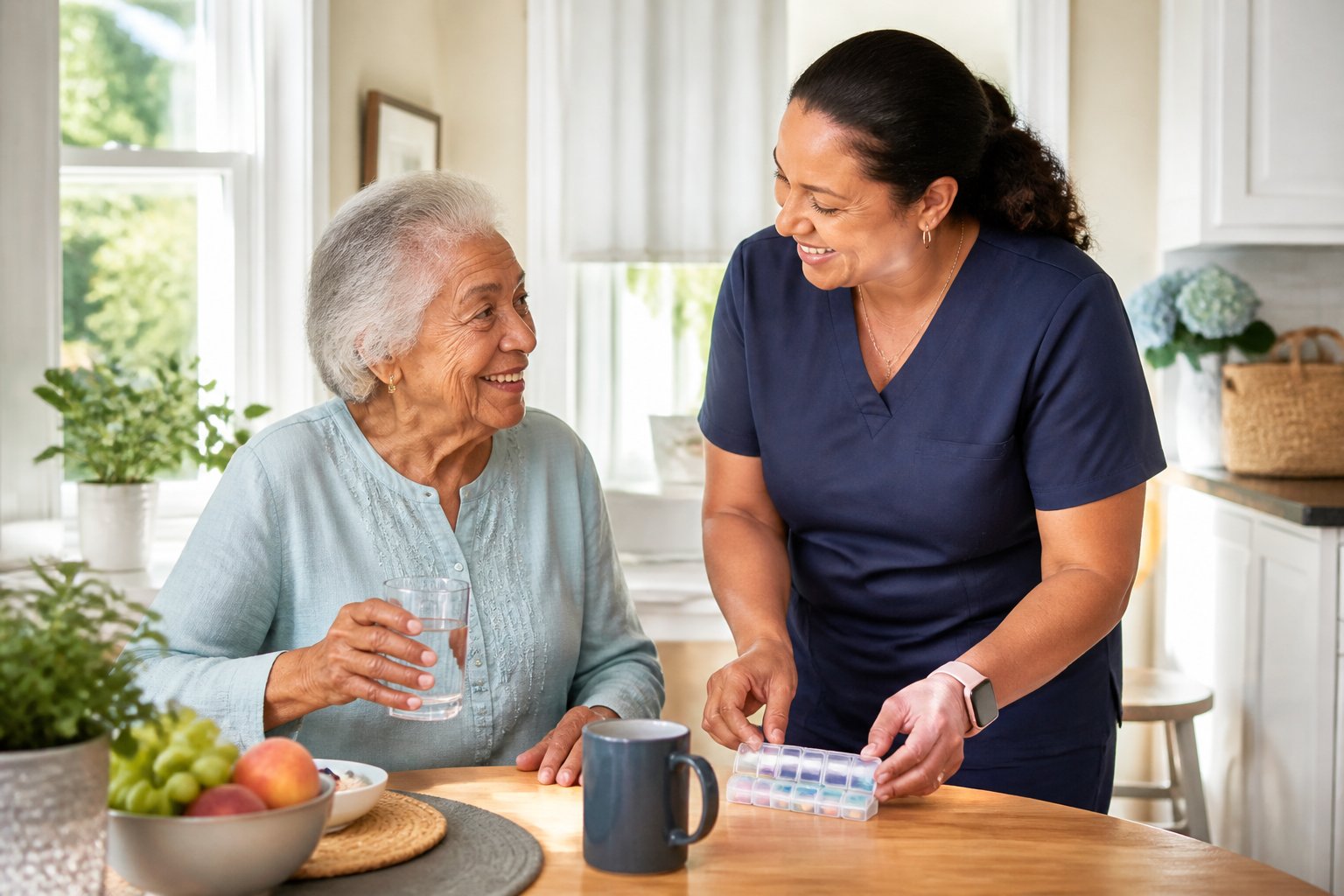
The laundry basket was full again. The same dishes sat in the sink, and your mother mentioned she had skipped her shower because the tub felt slippery. Nothing was an emergency. Nothing was quite right either. So you started wondering what a home care aide would do all day if someone came to the house, and whether that kind of help would feel welcome or intrusive.
The answer is easier to judge once you can picture it: daily, non-medical support in a real home, with a real person in it.
In this guide, you'll discover what a caregiver handles hour by hour, where the line sits between daily living help and skilled medical care, and how to tell whether your parent has reached the point where this kind of support fits. You do not have to sort this out on your own.
What a Home Care Aide Does and Does Not Do
A home care aide helps your parent with the ordinary tasks of daily life: bathing, dressing, meals, tidying up, getting safely from room to room, and having someone to talk to. They do not diagnose, treat, or perform medical procedures. That boundary is the single most useful thing to understand before you hire anyone.
Think of it this way. A caregiver is there for the parts of the day that keep your mother comfortable, clean, fed, and connected. A nurse is there for wounds, injections, and clinical monitoring. Both roles matter, and many families use both at once.
The caregivers doing this work are people first, which is why the screening, training, and personality fit behind the person matter as much as the task list.
How Non-Medical Daily Living Support Differs From Skilled Home Health Care
Non-medical support covers daily living. Skilled home health care covers clinical needs ordered by a physician.
A home care aide can help your father into the shower, cook his breakfast, remind him it is time to take his pills, run the vacuum, and drive him to a dentist appointment. Those hours are shaped by his preferences and his pace.
Skilled home health care works differently. Medicare covers it only when a physician certifies the need and the patient is homebound, and the Medicare home health benefit explicitly does not pay for custodial or personal care when that is the only care a person needs.
Here is the practical split:
- A home care aide handles: bathing, dressing, grooming, meal preparation, light housekeeping, laundry, errands, transportation, companionship, and medication reminders as a verbal prompt
- A skilled clinician handles: wound care, injections, catheter care, physical therapy, blood pressure monitoring as a clinical assessment, and any change to a medication order
When a Nurse, Therapist, or Medical Provider Is Needed Instead
Certain needs call for a licensed professional, and a good agency will tell you so plainly. Wound care after a hospital stay, insulin administration, and post-stroke rehabilitation all sit outside what non-medical in-home care provides.
Medicare-covered home health includes part-time skilled nursing, physical therapy, occupational therapy, and speech-language pathology when a provider orders it after a face-to-face assessment.
Families often pair the two. A visiting nurse comes twice a week for a dressing change while a caregiver covers the other 40 hours, making sure your mother eats, moves safely, and is not alone all day.
What Different Caregiver Titles Can Mean in Massachusetts
In Greater Boston, you will hear several titles for the person who helps at home: caregiver, home care aide, personal care attendant (PCA), home health aide (HHA), and certified nursing assistant (CNA). These titles can reflect different training, different work settings, and different programs, and the same title can come with a different set of assigned tasks from one employer to the next.
So the title alone will not tell you what someone does in your parent's home. What matters is the person's training, who supervises them, and the specific tasks the agency or employer assigns. In non-medical home care, that scope is daily living support, whatever the badge says.
What you should ask about is training and supervision, since those determine what your parent actually receives day to day. Which brings us to the part families most want to picture: an ordinary Tuesday.
A Day of Non-Medical Support at Home
A typical shift follows your parent's own rhythm. The caregiver arrives, helps with personal care, makes a meal, keeps the home in order, and stays present through the quieter hours. Nothing about it feels clinical.
The shape of the day comes from the care plan, which the agency builds with the family and updates as needs change. A caregiver working a four-hour morning shift covers different ground than one working a live-in schedule.
What stays constant is the human part. A familiar caregiver is more likely to notice when your father skips lunch two days in a row or seems unsteady on his left side. That kind of attention comes from consistency.
Starting the Morning With Personal Care and Dressing
Mornings often carry the most risk and the most vulnerability. Bathing, toileting, and dressing are where many falls happen and where dignity feels most fragile.
A trained caregiver knows how to steady someone during a transfer, how to keep a bathroom floor dry, and how to offer help without making an adult feel handled. Personal care includes hygiene, grooming, oral care, dressing, and help getting to and from the bathroom throughout the day.
Pace matters here. Rushing a person with arthritis through buttons and socks creates frustration for everyone. A good caregiver builds in the extra ten minutes.
Making Meals, Offering Medication Reminders, and Supporting Mobility
Cooking is often one of the first daily tasks to slip when energy or memory declines. The caregiver plans and prepares meals your parent enjoys, sits with them while they eat, and handles feeding assistance when that becomes necessary.
Medication reminders are verbal prompts only. The caregiver says it is 9 a.m. and time for the morning pills in the organizer the family or pharmacist filled, checks that they were taken, and notes anything unusual. They do not measure doses, administer injections, or take blood pressure as a clinical reading.
Mobility support runs through the whole shift: a steady arm to the kitchen, help repositioning in a chair, encouragement to walk the hallway twice. Fall prevention is woven into every one of those moments.
Keeping the Home Comfortable With Light Household Tasks
A cluttered home is a hazardous home. Light housekeeping keeps walkways clear and the kitchen safe, which protects the independence your parent is trying to hold onto.
Typical household support includes:
- Vacuuming and sweeping high-traffic areas, especially around stairs and thresholds
- Washing dishes and wiping down counters after meals
- Laundry, including washing, folding, and putting clothes away
- Changing bed linens and keeping the bathroom clean and dry
- Taking out trash and checking the refrigerator for spoiled food
Heavy cleaning, roof work, and moving furniture are not part of the role. The goal is a comfortable, navigable home.
Making Room for Errands, Appointments, and Genuine Companionship
Isolation takes a real toll, and for many families this part of the day matters most. Companion care covers conversation, card games, walks, reading aloud, and simply being in the room.
Transportation services fold into the same shift. The caregiver drives your mother to the pharmacy, waits during a podiatrist appointment, and helps carry groceries in from the car.
For a fuller picture of how these hours get scheduled and staffed, this walkthrough of how home care services work fills in the operational side. Once you can picture the day, the harder question arrives: does your parent need it yet?
When This Level of Help May Fit Your Parent's Needs
Home care fits when daily routines have become harder to manage safely and consistently, but your parent does not need a facility. Many families reach that point gradually, then notice it all at once.
There is rarely a single triggering event. More often it is an accumulation: three missed appointments, a burn on the stove hood, a sweater worn four days running. That is one reason a free in-home consultation is a sensible first step: these patterns are hard to read from a distance or during a holiday visit.
How Support Can Protect Independence Without Taking It Away
The fear underneath most of these conversations is that accepting help means losing control. In practice, the right help often does the opposite. A caregiver who handles the shower and the grocery run frees your father to spend his energy on what he chooses.
This is the heart of aging in place. Care that adapts around a person's habits, rather than the person adapting to an institution's schedule. Personalized in-home support works because it keeps decisions with the person receiving care. Start small. A few hours twice a week can show you whether the fit is right.
When Family Caregivers Need Consistent Relief and Backup
Sometimes the person who needs support is you. Burnout in adult children and spouse caregivers shows up as short tempers, missed work, and health problems of your own.
Respite care gives you scheduled, reliable relief so you can sleep, travel, or attend to your own family. It also builds a backup plan for the week you get the flu. Families who feel guilty about this often find the guilt fades once they see their parent enjoying the caregiver's company.
Why Memory Changes and Mobility Concerns May Call for More Coverage
Alzheimer's and dementia change the math on coverage. Wandering risk, sundowning, and confusion about medications can create hours that should not go unattended, and a few scheduled shifts may stop being enough. Caregivers with dementia care training can help, and if you are weighing more coverage, this look at 24-hour care needs can help you think through the threshold.
Mobility decline can follow a similar arc, and disabilities that limit transfers may call for extra hands or longer hours. Knowing you need help is one thing. Knowing who to trust in your parent's home is another.
How to Choose a Trusted Caregiver Arrangement
Judge a caregiver arrangement on screening, training, supervision, and what happens when someone calls out sick. Those four things separate a dependable arrangement from a fragile one. Ask direct questions and expect direct answers. Any reputable provider will welcome them.
Why Caregiver Matching and Consistency Matter to Your Loved One
A rotating cast of strangers undoes much of the benefit. Consistent caregiver matching lets your mother build a real relationship with the person helping her bathe.
Familiarity also improves safety. Someone who has been in the home for six weeks is more likely to notice a new tremor or a change in appetite that a first-day substitute might miss.
Ask how the agency handles a poor match. The willingness to change caregivers without drama tells you a great deal about the culture.
A More Supported Day at Home
A home care aide gives your parent the ordinary things that make an ordinary day possible: a safe shower, a warm meal, clean laundry, a ride to the appointment, and a person who is glad to see them. None of it is medical, and all of it can be the difference between managing at home and struggling at home.
You are weighing this because you want your mother or father to stay where they are comfortable, with their own chair and their own kitchen window. That goal is reasonable, and it is often reachable when the right support is layered in before a crisis forces the decision.
If this sounds like the help your parent needs, Executive Home Care Northeast Greater Boston offers a free in-home assessment: a no-obligation conversation where you can ask questions and see what a personalized plan would include. Schedule an in-home assessment or call (855) 350-2273 to start with a caregiver matched to your parent's routine and personality.
Frequently Asked Questions
What Does a Home Care Aide Do for an Older Adult at Home?
A home care aide helps with bathing, dressing, grooming, toileting, meal preparation, light housekeeping, laundry, errands, transportation, and companionship. They also offer medication reminders as verbal prompts and support safe movement around the house. The work is non-medical and shaped around your parent's own routine and preferences.
What Is the Difference Between a Caregiver and a Home Care Aide?
In everyday use, the two terms often overlap: both usually describe someone who provides non-medical daily living support in the home. "Caregiver" is also used for unpaid family members doing the same work. When you are hiring, ask about the specific training and supervision behind the title.
Can a Home Care Aide Give Medications or Check Blood Pressure?
Not in a non-medical role. A home care aide can remind your parent that it is time to take a medication and confirm it was taken, but measuring doses, giving injections, and taking clinical readings fall outside non-medical home care. Those tasks belong with a licensed nurse or another qualified clinician.
How Do I Know Whether My Parent Needs a Home Care Aide?
A home care aide may fit when your parent's medical needs are under control, but daily routines like bathing, meals, housework, or getting around safely have become hard to manage alone. A free in-home assessment gives you a clearer read than a weekend visit can.
What Should Families Ask About a Home Care Aide's Training and Background Check?
Ask what the background check covers and how often it repeats, how many training hours are required, who supervises the caregiver, and how visits are documented. Request to see the documentation rather than accepting a general assurance. Also ask how the agency handles a caregiver who is sick or a match that is not working.