
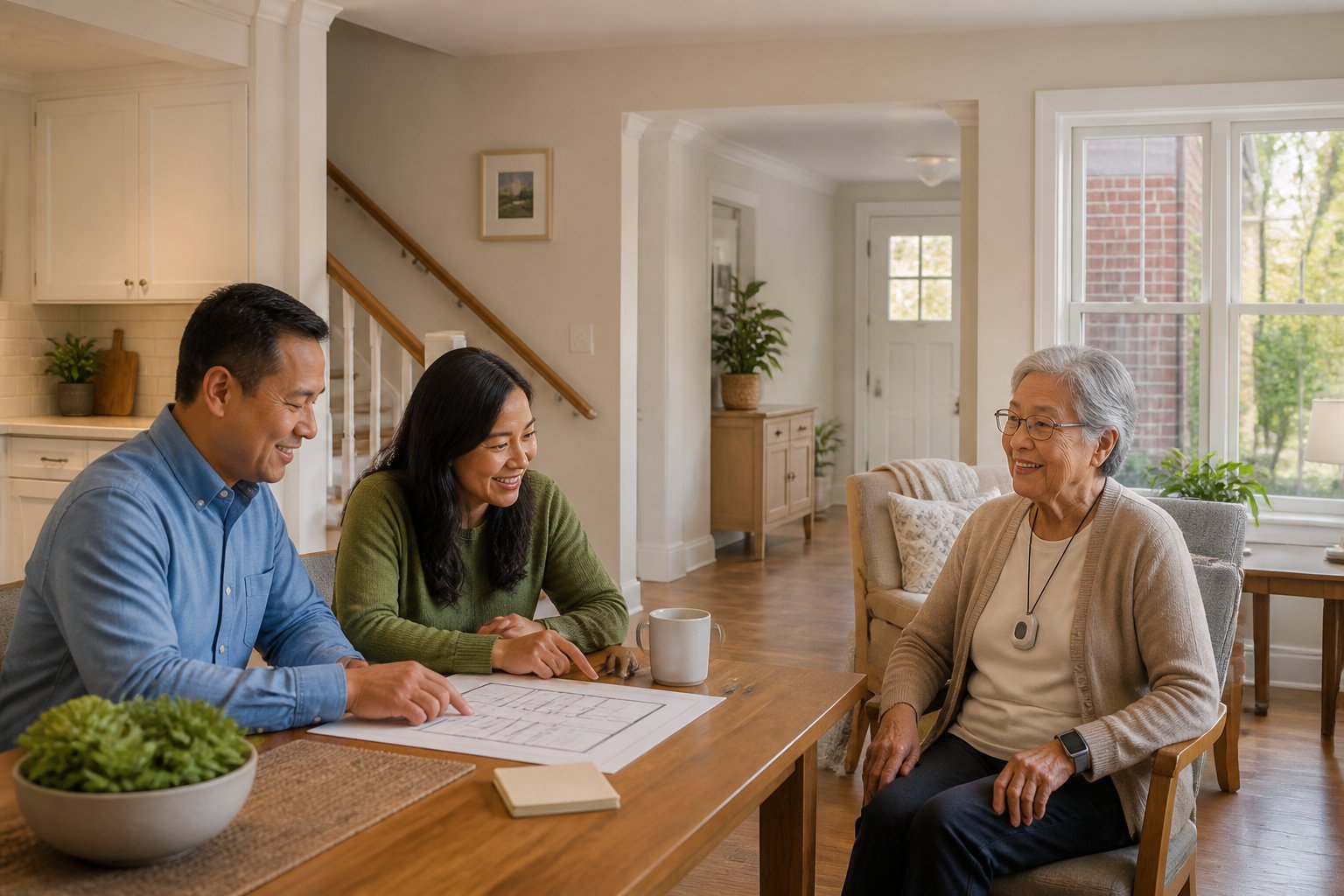
Your mother has lived in that house for decades, and she has no plans to leave. On your last visit, though, the hallway light was burned out, and the back steps looked steeper than you remembered. Nothing was wrong exactly, but you have started thinking about what it would take for her to stay there safely.
Wanting your parent to remain in the home they love is a good instinct. Aging in place tends to go best when families plan ahead, one safe change at a time, instead of waiting for a fall or a hospital stay to force the decision.
In this guide,e you’ll discover how to judge whether staying home is realistic, which home modifications to make first, how to build routines that protect both safety and social life, and when a few hours of non-medical help each week becomes the natural next step. You do not have to sort all of this out by yourself, and you do not have to sort it out today.
What Staying Home Can Make Possible
Many older adults want to stay in their homes as they age. Familiar surroundings can support memory, mood, and confidence in ways a new building rarely does, and the National Institute on Aging notes that aging in place requires careful consideration and planning to do safely.
Staying home protects the small things that make up a life. The neighbor who waves from the porch. The church your father has attended for forty years. The chair by the window where your mother reads every morning.
Those details are not sentimental extras. They anchor emotional well-being and mental health, and they give a caregiver something real to work with when building a daily routine.
Is Aging in Place the Right Choice for Your Loved One?
Ask what your loved one can still do safely, then ask what supports would close the gap. Independence and safety are not opposites, and many gaps are smaller than families first fear.
Work through these questions together as a family:
- Can your loved one move through the home, including stairs and the bathroom, without close supervision?
- Are medications taken correctly, and is there a system that shows when a dose is missed?
- Is the home reachable for family, deliveries, and caregivers year-round, including winter in the Northeast?
- Does your loved one still eat regular meals and keep up with basic hygiene and laundry?
- Is there someone who would notice within hours, not days, if something went wrong?
A “no” on any of these points toward a specific support, not toward a facility. Grab bars, a weekly caregiver visit, or a meal service each solve a different gap.
How Autonomy and Familiar Routines Support Well-Being
Autonomy is the piece families underestimate. When your father chooses when to eat, what to wear, and which show to watch, he stays engaged, and engagement can support both physical health and cognitive function.
Familiar routines also make decline easier to spot. A caregiver who visits the same home every Monday and Friday learns the baseline: how quickly your mother rises from her chair, how clearly she follows a conversation.
That kind of attention comes from consistency, not just availability.
When Assisted Living or Nursing Home Care May Be a Better Fit
Some situations call for more than a house can offer. A parent who needs skilled nursing around the clock, who wanders at night with no one home, or whose medical needs change hourly often does better in a setting built for that level of care.
Assisted living and senior living communities supply staff on site at all hours and remove the burden of home upkeep. Nursing home care adds licensed clinical oversight for complex medical conditions.
Some families find that continuous non-medical support at home handles what they feared would require a move, especially when they compare live-in care versus assisted living side by side. That comparison gets a lot clearer once you know how safe the house itself is.
Make the Home Safer Before a Crisis
Fix the home before an injury forces your hand. Many falls happen in rooms your parent uses every day, and many of the changes that reduce that risk are inexpensive and quick to install.
The National Institute on Aging’s tips on home safety for older adults make a solid checklist to bring on your next visit.
Do this while your loved one is healthy. Installing a grab bar after a hospital stay feels like a defeat; installing one in a calm month feels like a home improvement.
Start With a Room-by-Room Home Safety Check
Walk the house slowly, one room at a time, and look at it the way someone with stiff knees and fading eyesight would.
- Entryways: loose steps, no handrail, poor lighting, and ice buildup in winter
- Bathroom: no grab bars near the toilet or tub, slippery floor, tub wall too high to step over
- Stairs: worn carpet, missing rail on one side, dim landing, items stored on treads
- Kitchen: daily items on high shelves, a stove left on, spoiled food in the refrigerator
- Bedroom: no lamp within reach, cords across the walking path, no clear route to the bathroom at night
- Throughout: throw rugs, extension cords, clutter in hallways, burned-out bulbs
Take photos as you go. Notes fade, and a photo settles the argument when a sibling three states away wonders whether the situation is urgent.
Small Home Modifications That Reduce Fall Risks
The highest-value fixes cost little. Grab bars in the shower and by the toilet, brighter bulbs in hallways and stairwells, non-slip mats, and removing every loose rug often do more than any single large project.
From there, accessibility upgrades scale with need: a raised toilet seat, a shower chair, a ramp at the front door, a stairlift when stairs stop being safe. Widened doorways come into play if a wheelchair enters the picture.
A medical alert system adds a backup for the hours nobody is there. Pair it with easy-open medication caps and a pill organizer your parent can manage without help, and small daily tasks become less risky. Caregivers trained in fall prevention at home can spot the hazards a family stops seeing after years of visiting the same house.
When to Ask an Occupational Therapist for Guidance
Bring in a professional when the changes get bigger than a grab bar. An occupational therapist evaluates how your loved one actually moves through the home and recommends modifications matched to that body, not to a generic checklist.
A home assessment can also come from a physical therapist, a geriatric care manager, or a certified aging-in-place specialist. Your local Aging Services Access Point or, for veterans, the Department of Veterans Affairs can help you find one.
Once the house is safer, the question shifts from the building to the day itself: what fills the hours, and who is there for them?
Build Routines and Connections That Support Daily Life
A safe house with empty days does not keep anyone well. Structure, company, and a reason to get dressed each morning matter as much as the grab bar does.
Loneliness has been linked to real consequences, including depression and faster cognitive decline. That makes the social side of the plan as deliberate as the safety side.
Start by mapping a normal week. When does your mother wake, eat, nap, and go out? A written rhythm gives everyone, family and caregivers alike, a shared picture of what normal looks like.
Support Daily Activities Without Taking Over
Help with the step that is hard, and leave the rest alone. If your father struggles to lift a full laundry basket, carry the basket; let him fold the clothes.
Taking over an entire task because it is faster costs your parent a skill. Good caregivers work this way on purpose, assisting with bathing or dressing while keeping choice and privacy with the client.
Light housekeeping and meal preparation follow the same rule. A caregiver can chop vegetables while your mother decides the menu and seasons the pot.
Prevent Loneliness With Meaningful Social Engagement
Put social contact on the calendar the way you would a doctor’s appointment. Unscheduled visits fade; scheduled ones happen.
Senior centers, congregations, library programs, and old hobby groups all work. So does a standing phone call with a grandchild every Sunday at the same hour.
Professional in-home companionship fills the weekday gaps with conversation, card games, walks, and errands shared with someone your parent comes to know well. Consistent caregiver matching means the same familiar face week after week.
Use Transportation, Meal Delivery, and Telehealth Thoughtfully
Pick services that remove a barrier without removing a routine. If driving has become unsafe, arrange rides that still get your mother to her regular grocery store and her regular hair appointment.
Meal delivery helps when cooking has become exhausting, though a cooked-together lunch twice a week keeps appetite and interest alive. Telehealth saves a difficult trip for routine follow-ups, while in-person visits stay important for anything physical.
Massachusetts families may qualify for additional help. The state’s Home Care Program and Frail Elder Waiver provide care management and in-home support services for older adults, people with disabilities, and people living with Alzheimer’s disease or related dementia.
Add Help Gradually as Needs Change
Bring in paid help early and in small amounts. Families who start with a few hours a week often adjust more easily than families who wait for a crisis and then need full coverage overnight.
Gradual help also protects the relationship. Your parent meets a caregiver while still healthy enough to enjoy the company, so the caregiver becomes a familiar person rather than a stranger who appeared after a bad fall.
How Non-Medical Home Care Supports Aging in Place
Non-medical in-home care covers the daily living tasks that get harder with age. Bathing, dressing, grooming, meal preparation, light housekeeping, and medication reminders as a non-medical prompt all fall inside this category.
That day-to-day steadiness can help keep a senior at home. Attentive personal care at home preserves dignity during private tasks, and companionship keeps the day from emptying out.
Families often discover the advantages of in-home senior care go beyond the tasks themselves: one person who knows your mother’s routine and notices the day she seems off.
Home Care Aides vs. Medical Home Health Professionals
These are two separate roles, and mixing them up leads to disappointment.
- Home care aide: non-medical support with bathing, dressing, meals, light housekeeping, errands, companionship, and reminders to take medication
- Medical home health professional: a nurse or therapist ordered by a physician for wound care, injections, skilled assessments, or physical and occupational therapy
Non-medical home care agencies provide the first kind of support. That care does not include medical or skilled nursing services, and a doctor’s order is not required to begin.
Many families use both. A nurse visits for a wound after surgery while an aide handles the meals, the laundry, and the company for the rest of the week. If you want the details spelled out, this walkthrough of how in-home care is scheduled covers the mechanics.
Begin With a Few Hours and Adjust Care Over Time
Start where the week is hardest. Some families begin with two visits a week covering bath day, grocery shopping, and a cooked meal, then expand as needs grow.
From there, care scales in steps: more weekday hours, weekend coverage, overnight support, then live-in care when someone should be present around the clock. Respite support gives a spouse or adult child a real break before exhaustion sets in. Memory loss follows its own path, and dementia care at home can increase in step with each stage.
Plan Ahead for Coverage, Benefits, and Legal Documents
Sort out coverage and paperwork while things are calm. Families who look into benefits and legal documents early tend to make steadier decisions than families doing it in the middle of a crisis. Medicare pays for part-time skilled home health care ordered by a physician for a homebound patient; it does not pay for ongoing non-medical help with bathing, meals, or housekeeping.
Long-term care insurance often does cover non-medical care, and the policy language determines the waiting period and daily benefit. Pull the policy out and read it now, not after a hospitalization.
Other options worth checking:
- Veterans benefits for qualifying veterans and surviving spouses
- Massachusetts Medicaid waiver programs, including the Frail Elder Waiver
- Life insurance policies with an accelerated or long-term care rider
- Personal savings and family contributions, agreed on in writing
Alongside funding, complete the legal pieces: a health care proxy, a durable power of attorney, and an advance directive. Preparing them in a calm month is far easier than facing a court process later.
A Thoughtful Path to Staying Home Safely
Families who do well with aging in place tend to treat it as a sequence, not a single decision. Make the house safer, build a weekly rhythm that includes people and purpose, then layer in professional help as the tasks outgrow what family alone can carry.
Each step protects the same things: your parent’s dignity, their independence, and the comfort of waking up in a home they know. Care that arrives in the right size at the right time helps keep quality of life intact instead of trading it away for safety.
Whenever you are ready to start planning, Executive Home Care Northeast Greater Boston offers a free, no-obligation in-home assessment, a face-to-face conversation where you and your loved one can ask questions and see what personalized in-home care would look like. You can request an in-home assessment or call (855) 350-2273. You do not need all the answers before you reach out.
Frequently Asked Questions
What Does Aging in Place Mean for an Older Adult?
Aging in place means staying in your own home and community as you grow older instead of moving to assisted living or a senior living community. It usually involves some combination of home modifications, support services, and in-home help. The goal is keeping familiar surroundings while adding the supports that make daily life safe.
What Home Modifications Should Families Make First?
Start with grab bars in the bathroom, brighter lighting in hallways and stairwells, and removing every loose rug and cord from walking paths. These changes target common fall spots and usually cost little. Larger projects like ramps, stairlifts, or widened doorways come later, guided by an occupational therapist.
When Should a Senior Begin Receiving In-Home Care?
Begin when daily tasks start slipping, not after a fall or hospital stay. Missed meals, skipped showers, unpaid bills, or a spouse caregiver who is worn out are all reasonable starting points. Some families begin with a few hours a week and expand from there.
What Are the Disadvantages of Aging in Place?
The main risks are isolation, an unsafe home layout, and family caregivers burning out while trying to fill every gap themselves. Homes with steep stairs, no first-floor bathroom, or long winter driveways take more planning. Most of these have a practical fix, but ignoring them is where aging in place breaks down.
How Can I Help My Parent Stay Social While Living at Home?
Put social contact on the calendar: a weekly senior center visit, a standing lunch with a friend, or a regular call with a grandchild. Consistency keeps it from fading. A companion caregiver who visits the same days each week adds conversation, shared activities, and a familiar face your parent looks forward to seeing.