
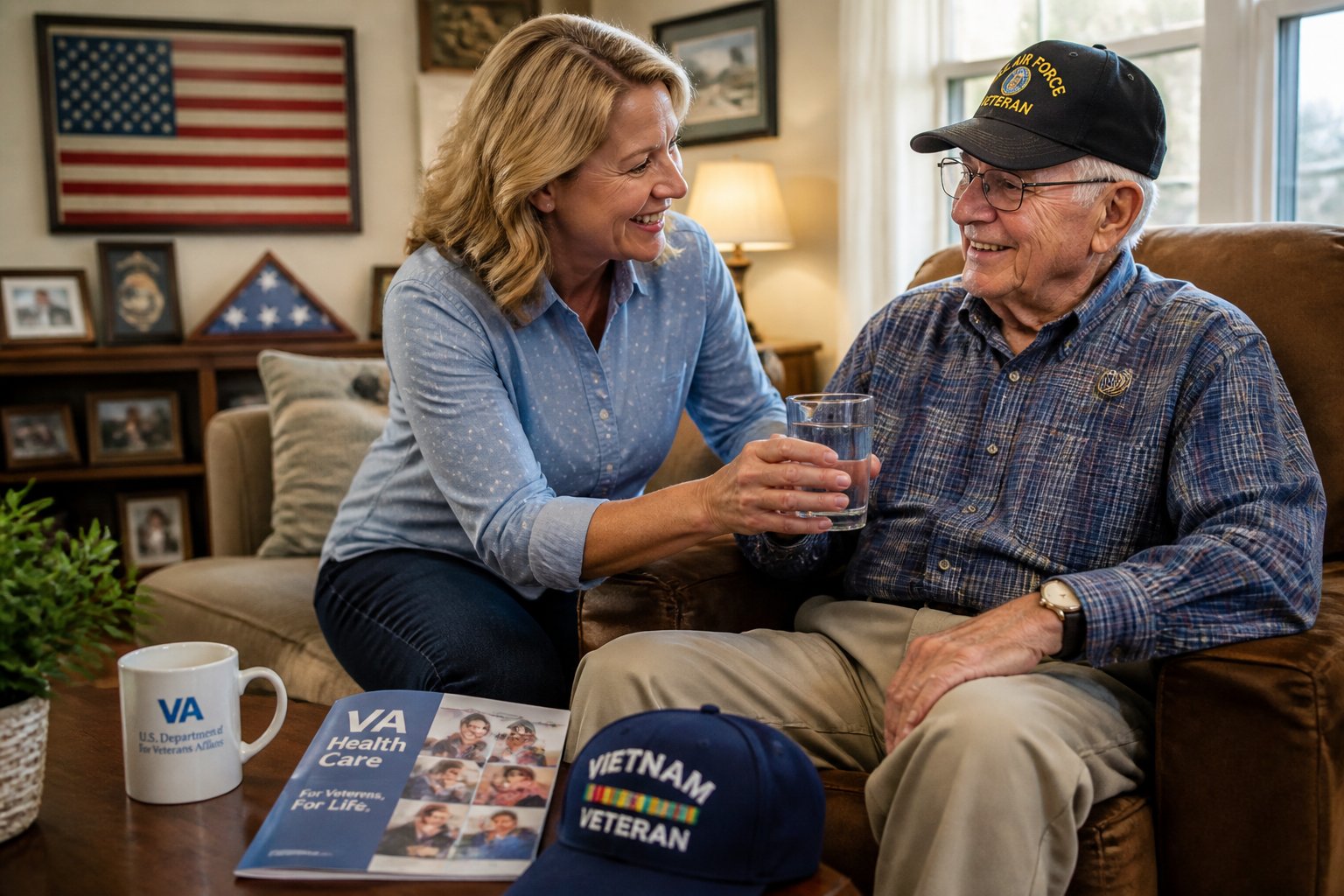
You have watched your father struggle to make breakfast safely. Or maybe your spouse, a veteran who served with strength and pride, now needs a steady hand just to get through the morning. The shift from independence to needing daily help feels sudden, even when the signs have been building for months.
If you are starting to ask whether the U.S. Department of Veterans Affairs (VA) offers any support that could keep your loved one at home, you are not alone, and you are asking the right question. In-home care for veterans is more available than most families realize, but the path to accessing it can feel tangled.
You are not the first family to feel lost in this system, and the help is real even when the paperwork makes it feel out of reach. Understanding both the practical steps and the emotional weight you are carrying is what turns a tangled process into a plan you can actually follow.
In this guide, you will find a clear breakdown of what VA home care programs actually include, who qualifies, and how to apply without drowning in paperwork. You will also learn when VA benefits alone may not be enough and how to blend them with a personalized care plan.
This is written for you, the person searching at midnight or between phone calls, trying to do right by someone who served.
What In-Home Care for Veterans Through the VA Can Include
In-home care for veterans through the VA covers a broader range of home and community-based services than most families expect. From a trained home health aide helping with bathing and meals to skilled nursing visits for wound care, the support is designed to keep veterans out of facilities and in familiar surroundings.
Non-Medical Help With Daily Living
Many veterans do not need medical procedures at home. What they need is a caring, trained person who shows up consistently to help with activities of daily living (ADLs). These are the basic tasks most of us take for granted.
- Bathing, grooming, and dressing
- Meal preparation and light housekeeping
- Medication reminders
- Safe movement around the home
- Companionship that combats isolation
This type of non-medical care at home makes a real difference for veterans who are still mentally sharp but physically limited. The caregiver is not a stranger performing tasks. The caregiver is a person, trained and screened, who builds a relationship with your loved one over time.
How Homemaker and Home Health Aide Care Works
The VA’s home health aide care program sends trained aides into a veteran’s home to provide personal care and household help. The VA arranges this through contracted home care agencies or community providers. A VA social worker or care coordinator evaluates the veteran’s needs and creates a plan.
Aides in this program are not volunteers. They go through training specific to the populations they serve, including aging veterans and those with cognitive decline. The goal is to help your loved one stay safe at home while giving family caregivers some breathing room.
This program can also serve as respite care for family caregivers. It is available to veterans of any age, which surprises many families.
When Families Also Hear About Skilled Services
You may hear terms like skilled home health care, skilled nursing, or wound care during conversations with the VA. These are medical services delivered by licensed nurses or therapists. They cover things like IV medication, physical therapy after surgery, or complex wound management.
Skilled home health is different from the daily living support most families are searching for. It is typically short-term, ordered by a physician, and ends once the medical goal is met.
If your loved one needs ongoing, relationship-based help with daily routines rather than a clinical procedure, the homemaker and home health aide program is usually the better fit.
Knowing the difference between these two categories is important because it shapes which programs you apply for and what kind of caregiver walks through your door. That leads to a question many families ask next: who actually qualifies for these benefits?
Who May Qualify and What Usually Determines Eligibility
Eligibility for VA home care benefits depends on three things: enrollment in VA health care, clinical need, and in some cases, income. Not every veteran qualifies for every program, but the starting point is simpler than most families assume.
VA Health Care Enrollment and Clinical Need
Before a veteran can access home care through the VA, they must be enrolled in VA health care. Enrollment is not automatic. You apply through VA.gov, by phone, or at a local VA medical center. Once enrolled, a clinical team evaluates your loved one’s care needs.
The VA looks at whether the veteran needs help with ADLs, has a condition that limits safe independent living, or is at risk of placement in a nursing facility. A veteran recovering from a fall, living with early-stage dementia, or managing a chronic illness that makes daily tasks unsafe may meet the clinical threshold.
The evaluation is conducted by a VA care coordinator or social worker. They assess both what the veteran can do and what puts them at risk.
Service History, Discharge Status, and Program Rules
Your loved one’s military discharge status plays a significant role. Most VA health care and home care programs require an honorable or general discharge. Veterans with other-than-honorable discharges may still qualify in certain situations, but the process involves additional review.
Wartime service is required for some pension-based benefits but not for all home care programs.
The Homemaker and Home Health Aide program, for example, is tied to VA health care enrollment and clinical need, not wartime service. Each program has its own set of rules. This is why speaking with a VA social worker early in the process matters.
If your parent or spouse served but you are unsure about their discharge status, you can request a copy of their DD-214 through the National Personnel Records Center. Having this document ready speeds up every application.
Income Limits for Pension-Based Benefits
Some VA home care benefits, especially Aid and Attendance (A&A) and Housebound benefits, are tied to the VA pension. This means they come with income limits. The VA uses a measure called countable income, which subtracts unreimbursed medical expenses from gross income.
Many families assume their veteran earns too much to qualify. But once you subtract out-of-pocket costs for medications, medical equipment, and even private caregiving, countable income can drop significantly.
A veteran paying for part-time home care out of pocket may actually become eligible for A&A once those expenses are factored in.
Understanding how income calculations work is the first step toward knowing which programs to pursue. The next question most families ask is: what exactly are these programs, and how do they differ from one another?
The Main VA Programs Families Should Understand First
Four VA programs cover the majority of what families need when keeping a veteran safely at home. Each one fills a different gap. Many veterans qualify for more than one at the same time.
Homemaker and Home Health Aide Care
This is the VA’s primary program for sending trained aides into a veteran’s home. As described earlier, it covers personal care, light housekeeping, and meal support. The VA contracts with community-based agencies to provide the caregivers, who are screened and trained before they begin working with your loved one.
Care can range from a few hours a week to daily visits. It can also function as respite care for a family caregiver who needs time to recharge. The program is available to enrolled veterans who meet the clinical need criteria. It is not restricted by age or wartime service.
Aid and Attendance and Housebound Support
Aid and Attendance is a monthly pension supplement for veterans (or surviving spouses) who need help with ADLs, are bedridden, or live in a care facility. Housebound benefits serve veterans who are largely confined to their home due to a disability.
These are cash benefits paid directly to the veteran or surviving spouse. The funds can be used to pay for private in-home care. This makes them a valuable piece of a larger care plan. Eligibility requires wartime service, limited countable income, and documented clinical need.
The application process involves VA Form 21-2680 and supporting medical evidence. Processing can take several months. Families often begin private care while waiting for approval.
Home-Based Primary Care and Adult Day Health Care
Home-Based Primary Care (HBPC) brings a VA medical team into the veteran’s home. This includes physicians, nurses, social workers, and rehabilitation therapists. It is designed for veterans with complex chronic conditions who have difficulty getting to a VA clinic.
Adult day health care provides daytime supervision, social activities, and health monitoring in a community setting. Both programs support veterans who need more than basic personal care but are not ready for a residential facility.
These programs may work alongside private companion care or personal care services. They fill in the hours that VA programs do not cover, especially evenings and weekends.
Family Caregiver Support Through the VA
The VA’s Program of Comprehensive Assistance for Family Caregivers provides a monthly stipend, training, and respite care for eligible family caregivers. Originally limited to post-9/11 veterans, the program has expanded to include veterans from all eras.
To qualify, the veteran must need at least six months of continuous personal care services. The family caregiver must be approved through a formal application and assessment process. A VA social worker guides the family through each step.
This program recognizes what every caregiver already knows: caring for a veteran at home is real work that deserves real support. If you are managing caregiving from a distance, a local caregiver receiving this stipend can provide the daily presence your loved one needs.
With so many programs available, the next thing families want to know is how to actually begin the application process without getting buried in forms.
How to Apply Without Feeling Overwhelmed
Start with one phone call to your local VA medical center. Ask for the social work or care coordination department. That single call opens the door to every home care program your loved one may qualify for.
Who to Call First and What Documents to Gather
Your first point of contact is a VA social worker or care coordinator. They will walk you through eligibility, recommend specific programs, and schedule an in-home or clinic-based assessment. You do not need to know which program fits best before you call.
Before that call, gather the following:
- DD-214 (discharge papers)
- VA health care enrollment confirmation
- List of current medications and diagnoses
- Recent hospital discharge summaries, if applicable
- Financial documents (income, assets, unreimbursed medical expenses)
- Power of attorney and proxy and other legal paperwork
Having these ready does not guarantee a fast decision. It prevents delays caused by missing paperwork.
How Referrals, Assessments, and Authorizations Happen
Once you connect with a VA social worker, they will evaluate the veteran’s needs and make a referral to the appropriate program. For homemaker and home health aide care, this includes a clinical assessment that measures the veteran’s ability to perform daily tasks safely.
The VA then authorizes a set number of care hours per week. A contracted home care agency receives the referral and assigns a trained caregiver. You should expect the process to take a few weeks from initial contact to the first caregiver visit, depending on local availability.
For pension-based benefits like Aid and Attendance, the timeline is longer. Applications go through the VA’s pension management center and can take three to six months. Filing early, with complete documentation, reduces the risk of delays.
What to Expect if Community Providers Are Involved
The VA does not always deliver care through its own staff. Through the VA Community Care network, the VA partners with approved community-based providers to deliver services closer to the veteran’s home. This is especially common in areas where VA facilities are limited.
If your loved one is referred to a community provider, the VA still covers the cost. The provider must be part of the VA community care network or receive prior authorization. You will work with both the VA care coordinator and the community agency to ensure the plan of care meets your loved one’s actual daily needs.
Community care does not mean lower quality. It means your loved one receives help from caregivers in their own neighborhood, people who show up with training, compassion, and consistency.
The real question families face once care is authorized is whether the approved hours are enough, or whether gaps remain.
How Families Compare VA-Funded Help With Private Pay Care
VA benefits can cover meaningful portions of your loved one’s care, but they do not always cover everything. Families often find that combining VA-funded hours with private in-home care creates the safest, most complete daily routine.
What VA Benefits May and May Not Cover
The Homemaker and Home Health Aide program typically covers a set number of hours per week, determined by clinical need. Aid and Attendance provides a monthly cash benefit that can be applied toward care costs. Neither program guarantees full-time coverage.
- VA homemaker aide care often covers 10 to 20 hours per week
- Aid and Attendance (2025 rates) may provide up to roughly $2,300 per month for a single veteran
- Weekend, evening, and overnight hours are frequently not included in VA-authorized care
- 24-hour or live-in care is rarely covered by VA programs alone
- Specialized dementia support may require additional private support beyond VA hours
Families who rely solely on VA hours may find that mornings are covered but evenings are not. Or that weekday care is solid while weekends leave the veteran alone.
When Respite or Short-Shift Help Is Not Enough
Many veterans start with a few hours of VA-funded help per week. That works for a while. Then a fall happens, or confusion worsens, or the family caregiver reaches a breaking point. Suddenly, the authorized hours feel like a fraction of what is needed.
If your loved one is showing signs of decline that outpace current coverage, it may be time to evaluate long-term care options that combine VA benefits with private pay support. This is not a failure of the system. It is simply how care needs evolve, and it is better to plan ahead than to scramble after a crisis.
Blending Benefit Programs With a Personalized Home Care Plan
The most effective approach for many veteran families is a blended care plan. VA-funded hours cover part of the week. A private home care provider fills the remaining shifts with caregivers who are trained, screened, and familiar with your loved one’s routine.
This blended model means your veteran has consistent support across the full day and week. It also means the caregiver team communicates, so nothing falls through the cracks. When you compare assisted living tradeoffs, many families find that staying home with a coordinated team costs less and preserves more independence.
Building the right blend depends on your loved one’s specific needs, the benefits they qualify for, and what your family can sustain. That naturally raises the question of how you know when it is time to reach out for help.
Keeping a Veteran Safe and Supported at Home
The safest time to ask for help is before a crisis forces you to. Recognizing the signs, preparing your questions, and knowing who to call puts you in the strongest position to protect your loved one’s independence.
Signs It Is Time to Ask for Help
You may have noticed small changes that are hard to name but impossible to ignore. Meals are being skipped. The house is not as clean as it used to be. Your loved one seems more withdrawn or confused than they were six months ago.
Here are specific signals that in-home care may be needed:
- Missed medications or doubled doses
- Unopened mail or unpaid bills piling up
- Bruises or injuries that go unexplained
- Withdrawal from activities, hobbies, or social contact
- Difficulty bathing, dressing, or moving safely through the home
- A family caregiver who is exhausted, anxious, or losing sleep
If you see two or more of these signs, it is time to start the conversation about care. Waiting for a hospitalization or a fall rarely leads to better outcomes.
Questions to Bring to a Local Care Conversation
When you sit down with a VA social worker or a home care provider, come prepared. The right questions lead to the right plan.
- What VA programs does my loved one currently qualify for?
- How many hours of care per week are typically authorized?
- What happens when care needs increase beyond the authorized hours?
- Can we blend VA hours with private in-home care?
- How are caregivers matched with veterans, and what training do they receive?
- What does the care plan include, and how often is it updated?
- Are there programs for memory care at home?
Write your questions down and bring them. You will remember more, and you will walk away with clear answers instead of vague reassurances.
When to Contact Executive Home Care Northeast Greater Boston
If your veteran needs more hours than the VA can authorize, or if you want a personalized care plan in place while benefits are being processed, our team is ready to help.
Caregivers go through a 360-degree onboarding process that includes advanced training, thorough screening, and compassionate matching to your loved one’s personality and needs.
When you are ready to build that plan, schedule a free assessment with Executive Home Care Northeast Greater Boston and get a care plan shaped around your veteran’s life. You do not have to sort out the VA maze by yourself.
Call 1-855-350-2273 and let a trusted care advisor walk you through your options at no cost. The assessment is a conversation, and you decide what happens next.
Frequently Asked Questions
How Can You Tell if Your Loved One Qualifies for VA Support to Stay Safely at Home?
Your loved one must be enrolled in VA health care and have a documented clinical need for help with daily living. A VA social worker will assess their ability to perform tasks like bathing, dressing, and eating safely. Discharge status and, for pension benefits, wartime service and income are also factors.
What Kinds of Personal Care and Homemaker Help Can the VA Approve to Protect Comfort and Independence?
The VA can approve homemaker and home health aide care that includes bathing assistance, meal preparation, light housekeeping, medication reminders, and companionship. These services are provided by trained aides sent through contracted community agencies. The goal is to support daily routines so the veteran can remain at home.
How Much Financial Help Might the VA Provide for In-Home Assistance, and What Costs Are Usually Not Covered?
Aid and Attendance can provide up to approximately $2,300 per month for a qualifying single veteran, and the Homemaker and Home Health Aide program covers authorized care hours at no cost to the veteran. Full-time or live-in care, overnight shifts, and hours beyond those authorized are typically not covered by VA programs alone.
What Steps Should You Take to Apply for VA In-Home Support, and What Paperwork Do Families Typically Need?
Call your local VA medical center and ask for the social work or care coordination department. Gather your loved one’s DD-214, VA enrollment confirmation, medication list, recent medical records, and financial documents. The social worker will guide you through the referral and assessment process from there.
Can the VA Pay a Family Caregiver, and What Rules Affect Who Can Be Compensated?
Yes. The Program of Comprehensive Assistance for Family Caregivers provides a monthly stipend, health insurance, and respite care for approved family caregivers. The veteran must need at least six months of continuous personal care services, and both the veteran and the caregiver must complete a formal application and VA assessment.
Is There VA Help Available for Home Modifications or Repairs That Improve Safety and Aging in Place?
The VA offers grants such as the Specially Adapted Housing (SAH) grant and the Home Improvements and Structural Alterations (HISA) grant for eligible veterans. These can fund modifications like wheelchair ramps, grab bars, and widened doorways. Eligibility depends on the veteran’s service-connected disability rating and specific clinical needs.